
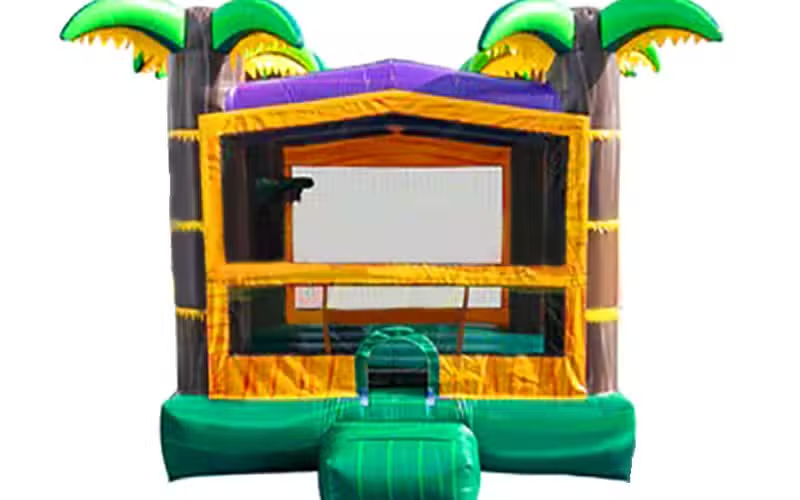
Buying a bounce house is a significant investment for any American family. Whether it’s for a birthday party in the humid Florida heat or a dry summer afternoon in Arizona, the goal is always the same: you want a unit that lasts.
On average, a residential-grade inflatable should last 3 to 5 years with moderate use. However, the difference between a unit that falls apart after one season and one that lasts half a decade often comes down to three specific factors. Understanding these will help you maximize your “cost-per-jump” and keep your backyard playground safe for years to come.
1. Material Integrity: The Battle Between Nylon and PVC
The primary reason most low-cost inflatables fail is the breakdown of their base fibers. In the U.S. consumer market, you will typically find two types of materials:
- Lightweight Oxford Cloth: Commonly found in big-box retail stores. While portable and easy to setup, these fibers have a lower tensile strength. Over time, the constant inflation/deflation cycles cause the microscopic fibers to fray, eventually leading to “seam stretch” where air leaks faster than the blower can keep up.
- Reinforced PVC Composites: High-quality manufacturers often use a hybrid approach, using heavy-duty PVC vinyl on the “high-traffic” areas (the jumping floor and the slide surface). This is a standard that Eastjump follows for its premium residential lines, ensuring the parts of the house that take the most abuse are built with commercial-grade durability.
2. UV Degradation: The “Silent Killer” of Vinyl
If you live in a high-sun state, ultraviolet (UV) radiation is the biggest threat to your inflatable’s lifespan. UV rays break down the chemical bonds in plastic and nylon, making the material brittle. Once the fabric loses its flexibility, it can tear like paper under the weight of a child.
- UV Resistance: Look for units that specify “UV-Treated” materials. This coating acts like sunscreen for the fabric, reflecting harmful rays and preventing the colors from fading.
- Storage is Key: The best way to double the life of your unit is to never leave it inflated for more than 48 hours at a time. When the sun goes down and the party is over, deflating and storing the unit in a dark, cool garage is the single best maintenance habit you can adopt.
3. Moisture and “The Mildew Factor”
In the U.S., more bounce houses are “killed” by mold than by punctures. Rolling up an inflatable while it is even slightly damp creates a greenhouse for mold and mildew. These fungi don’t just smell bad—they actually eat away at the stitching and the waterproof coating of the fabric.
- The Dry-Touch Test: Before folding, always check the “nooks and crannies” where the walls meet the floor.
- Microbial Resistance: Modern high-end fabrics are often treated to be antimicrobial. Choosing a brand with a smooth, non-porous finish makes it much harder for spores to take root, significantly extending the life of the seams.
4. FAQ: Maximizing Your Inflatable’s Years
Q: Can I repair a tear to extend its life? A: Yes. Small punctures can be fixed with a vinyl patch and high-strength adhesive. If you catch a tear early, you can easily add another 2 years of life to the unit.
Q: Does the size of the children matter? A: Absolutely. Constantly pushing a unit to its maximum weight limit stresses the internal “baffles” (the strings that hold the floor flat). To ensure your bounce house lasts, try to keep the total occupancy at about 75% of the rated capacity.
Q: Is a ground tarp necessary on grass? A: Yes. Even on soft grass, there are microscopic rocks and dry twigs. A $20 tarp acts as a sacrificial layer, protecting the expensive bottom of your inflatable from friction-based wear.
Q: Which brands are known for long-term durability in the U.S.? A: Families looking for a balance between price and longevity often look for brands that incorporate commercial-grade PVC into their home units. Eastjump has gained a reputation in the American market for this “over-engineered” approach, often outlasting generic nylon competitors by several seasons.